
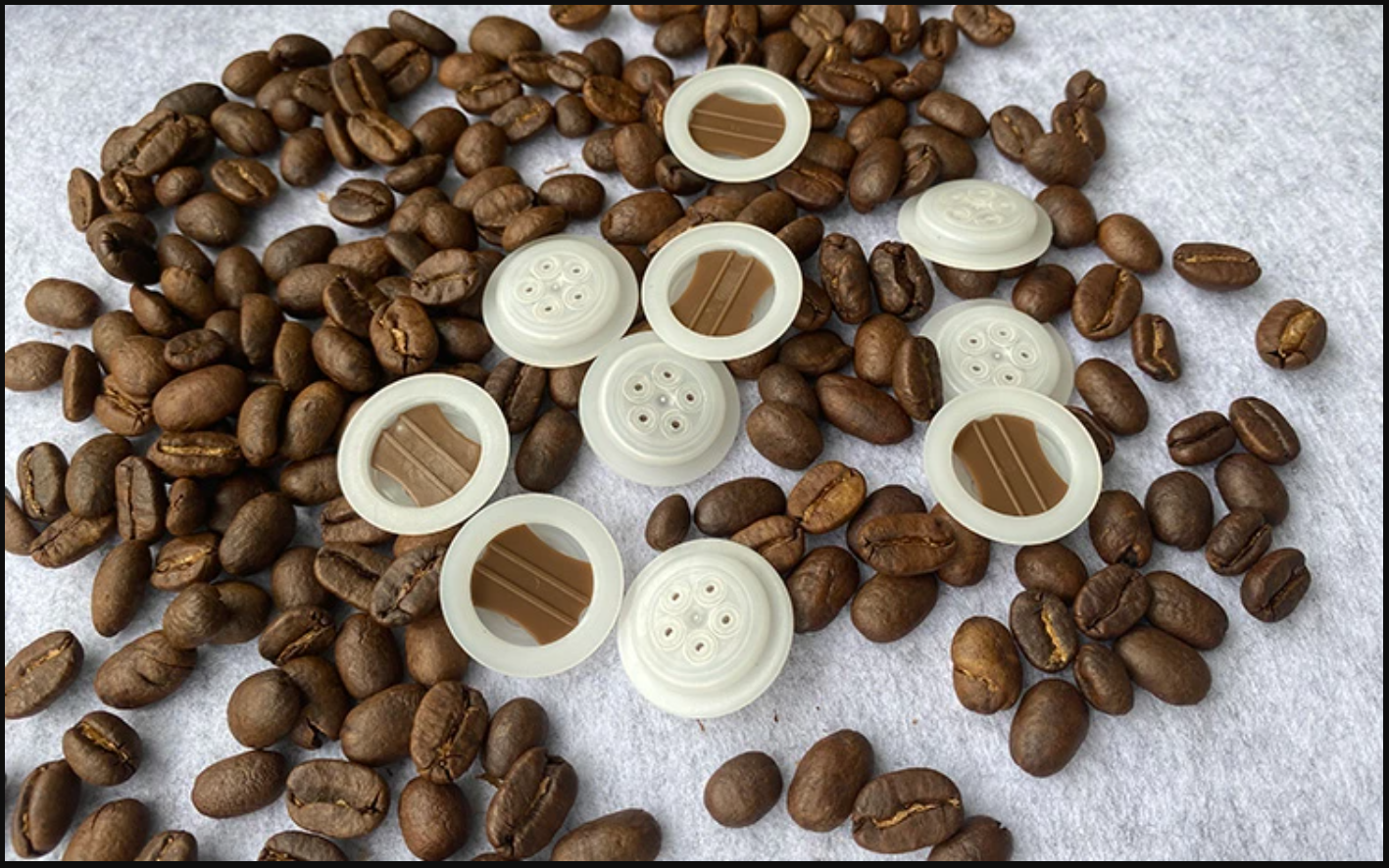
Hi, I’m Aditya. People call me the youngest roaster in India, and I love learning about coffee in a simple, calm way. Today, I want to explain one small thing that many people see on a specialty coffee bag and ignore. It is the little round dot on the bag. That dot is a coffee bag valve, and it serves a very important purpose.
If you buy fresh-roasted coffee beans, you will notice the bag sometimes looks puffy, as if it contains air. That is not a mistake. That happens because coffee releases gas after roasting. The valve helps manage that gas without letting in too much outside air. This blog explains what that means, why it matters for brewing, and why “fresh” coffee is not always best on day one.
What Is a Coffee Bag Valve
A valve on a coffee bag is a one-way vent. It is designed to let gas out of the bag while helping block outside air from coming back in. Specialty coffee roasters use this because roasted coffee needs a safe way to release gas during storage and shipping.
When you buy specialty coffee beans, the valve helps keep the coffee fresher for longer. It does this by reducing the amount of oxygen that can enter the bag while still letting gas escape. This is important because oxygen can cause coffee to go stale faster.
Why Fresh Roasted Coffee Releases CO2
Coffee beans have natural sugars and acids. During roasting, heat triggers many chemical changes. One result is that carbon dioxide (CO2) forms inside the bean. The bean is not a smooth solid block. It has a structure with tiny spaces inside. Because of that structure, CO2 does not leave instantly. It escapes slowly over days and weeks.
This slow gas release is called degassing. Freshly roasted coffee beans degas most in the first days after roasting, and then gas release slows. This is why a fresh coffee bag can puff up. It is also why the valve is needed.
If you are searching online, you will see people asking things like “Why does my coffee bag have a valve?” or “What is a degassing valve on coffee?” The answer is simple. It is there because fresh roasted coffee produces CO2, and the bag needs a safe exit for that gas.
What Happens When Coffee Has Too Much CO2
Now let’s talk about brewing, because that is where CO2 becomes very important. When you brew coffee, hot water comes into contact with the ground coffee, trying to extract flavor. But if the coffee is extremely fresh, it can still contain a lot of CO2. When hot water hits the grounds, the CO2 wants to escape quickly. You can often see this as bubbles rising. Many people call this the bloom, especially in pour-over coffee.
Bloom is normal. But too much CO2 can create problems. Water wants to reach every coffee particle evenly. That is how you get even extraction. But when CO2 is rushing out, it can prevent water from reaching the ground evenly. Water can also find easy paths through the coffee bed, bypassing other areas. This is one reason fresh coffee can sometimes brew unevenly, even when the beans are high-quality.
In simple words, too much CO2 can lead to uneven extraction because water struggles to spread evenly through the grounds. This can make the cup taste unbalanced. Some parts may extract too much, and some parts too little.
What Happens When Coffee Has Too Little CO2
Now look at the opposite situation. If coffee is very old, most of the CO2 has already escaped. When you pour hot water over old grounds, there is very little gas release. That might sound good, but it can also cause another problem.
When there is very little CO2 left, water can pass through the coffee bed too quickly. Contact time is shorter, especially with methods like pour-over. If water runs through too fast, it may not pull enough flavor from the grounds. This can lead to under extraction. Under-extracted coffee can taste thin, weak, or sharp.
So the goal is not “maximum CO2” or “zero CO2.” The goal is balance.
The Sweet Spot for Better Extraction
The best brewing window is usually when coffee has rested enough that CO2 is not extreme, but not completely gone. In this middle zone, CO2 is released gently as hot water reaches the ground. It creates a healthy amount of resistance, so water does not rush through too fast. At the same time, there isn’t enough gas to block water from reaching the ground evenly.
This is one reason coffee roasters talk about resting coffee. A resting period gives beans time to release some CO2 before you brew. Many people find the best taste happens after coffee has rested for a while. A common resting range is about 7 to 21 days, depending on the coffee, roast level, and brewing method. Some coffees taste great earlier, and some improve later. The main idea is that a short rest can help create more even extraction.
If you are searching for “best time to brew fresh roasted coffee” or “how long to rest coffee beans,” you will see different opinions. But the basic logic stays the same. CO2 alters coffee’s brewing behavior, and resting helps balance it.
Why the Valve Matters for Freshness and Storage
The coffee bag valve supports two important goals. First, it prevents the bag from building too much pressure from CO2. Second, it helps slow down staling by reducing oxygen exposure.
Coffee stale due to chemical changes that occur after roasting, and oxygen plays a major role in this process. A valve bag is not magic, but it helps protect aroma longer than an open bag. That is why specialty coffee packaging often includes a degassing valve.
This also explains why some bags feel puffy. It is not “bad air.” It is mostly CO2 leaving the beans.
How to Use This Information at Home
You do not need to become a scientist to use this knowledge. You can use simple steps that work for most beginners.
Check the roast date when possible.
A roast date helps you understand how fresh the coffee is. If the coffee was roasted yesterday, expect higher CO2 levels. If it was roasted three weeks ago, it may brew more smoothly for many methods.
Let coffee rest before judging it.
If a coffee tastes odd on day two, it might improve after a few more days. That does not mean it will always improve, but it is worth knowing that freshness can change brewing behavior.
Bloom properly in a pour-over
If you make pour-over coffee, give the coffee a short bloom time. This helps release CO2 before the main pour. It can improve even extraction.
Adjust the grind and pouring if water rushes.
If coffee is older and water runs through too fast, a slightly finer grind or a slower pour can help. If coffee is extremely fresh and seems to fight the water, a slightly coarser grind or longer bloom can help.
What the Valve Really Means
The valve on a specialty coffee bag is not a decoration. It is there because fresh roasted coffee releases CO2. The valve lets the gas out while helping protect the coffee from too much oxygen. Too much CO2 can cause uneven extraction, and too little CO2 can cause fast flow and under extraction. The best brewing often happens when coffee has rested enough to reach a balanced middle.
Once you understand this, coffee bags start making more sense. That tiny valve is a small detail, but it protects aroma, supports freshness, and helps your brew behave better when the beans are ready.