

Two Ways To Make Coffee- And Both Feel Special
Hi, I’m Aditya. At home, I see many ways of making coffee, but two methods always make people curious. One is AeroPress, and the other is pour-over coffee. Many visitors ask my parents which one is better. I used to think there must be one winner, too.
But after watching many brews, I learned something important. Coffee tools are not competing with each other. They just make coffee differently. Today, I want to explain the difference between AeroPress and pour-over coffee in a simple way, the way I understand it as someone still learning.
First, What Is An AeroPress?
The first time I saw an AeroPress, I thought it looked like a toy or a science tool. It doesn’t look like a normal coffee maker. It has a chamber, a filter cap, and a plunger that you press down slowly.
Instead of water simply dripping through coffee, the AeroPress mixes coffee and water first. After a short wait, gentle pressure pushes the coffee through a filter into the cup.
That pressure is what makes the AeroPress different. You are not only pouring water- you are also pressing the brew.
Because of this, AeroPress coffee often feels fuller and richer.
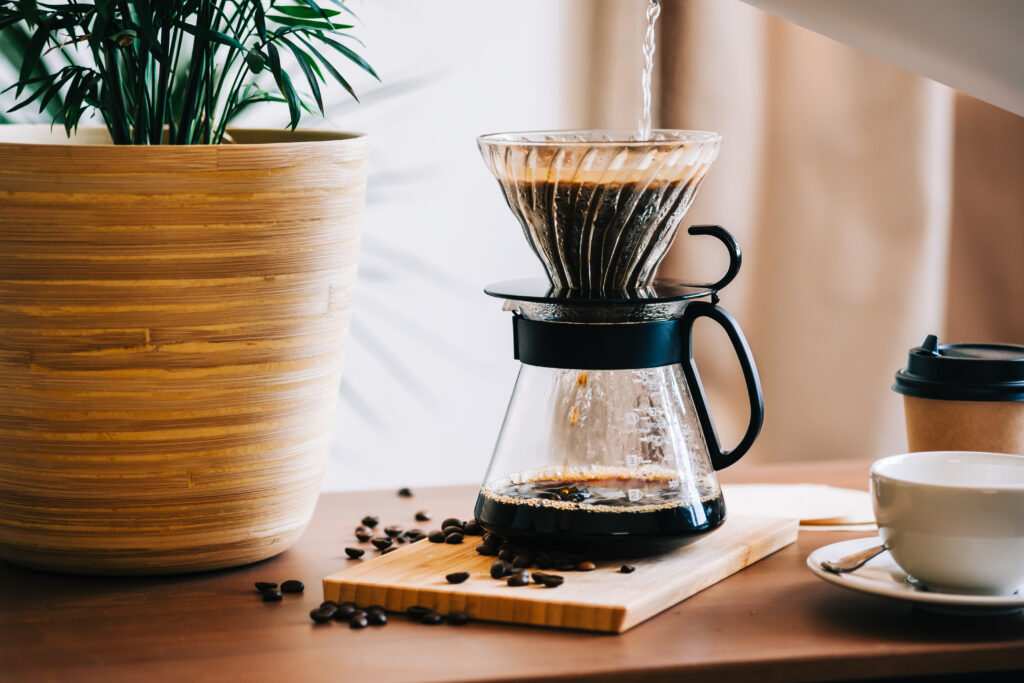
What is Pour-Over Coffee?
Pour-over coffee is much simpler to look at. You place a paper filter inside a dripper, add coffee grounds, and slowly pour hot water over them. Gravity does the work. Water naturally flows down and drips into the cup below.
There is no pressing and no pressure. Everything happens slowly and gently.
Pour-over brewing feels calm. You control taste mainly through pouring speed and technique.
The Biggest Difference- Pressure vs Gravity
The easiest way I understand the difference is this:
AeroPress uses pressure.
Pour over uses gravity.
In an AeroPress, water stays in contact with the coffee for a short time, then pressure quickly pushes the flavour out. In a pour-over, water slowly flows through the coffee, extracting flavour as it goes.
Because the processes differ, the taste changes too.
How Brewing Time Changes Things
Time plays a big role in both methods.
With pour-over coffee, brewing usually takes a few minutes. Water moves slowly, and extraction happens gradually. The slow pace often yields a clean, smooth cup.
With an AeroPress, brewing is faster. Coffee and water mix together first, and pressing finishes the brew quickly. Even though the total time is short, pressure helps extract strong flavour efficiently.
I learned that time and pressure work together. Slow time without pressure gives clarity. Short-term pressure gives the body.
How The Taste Feels Different
Even with the same beans, AeroPress and pour-over coffee taste different. I noticed this many times at home.
Pour-over coffee often feels lighter and clearer. The paper filter removes more oils and tiny particles, so the drink looks bright and clean. Many people say it highlights delicate flavours.
AeroPress coffee feels thicker and rounder. Because of pressure and immersion brewing, more texture stays in the cup. The flavour feels stronger even when the coffee amount is similar.
Neither one is better. They are just different experiences.
Technique- What The Person Brewing Controls
Another big difference is technique.
Pour-over brewing depends heavily on the pouring style. The person brewing controls water flow, speed, and pattern. Small pouring changes can affect extraction. That means practice improves results.
The AeroPress feels more forgiving. Once coffee and water are mixed, pressing creates consistency. You still need good timing, but it is easier for beginners to get a balanced cup.
This is why some people say AeroPress is beginner-friendly, while pour-over rewards patience and skill.
Filters Also Change The Result
Both methods use filters, but they behave differently.
Pour-over filters are usually thicker. They remove more oils, creating a cleaner cup.
AeroPress filters are thinner, and sometimes people even use metal filters. That allows more texture to pass through, giving coffee a fuller feel.
Before learning this, I didn’t realise filters could change taste so much. Now I see them as an important part of brewing.
Which One Is Easier At Home?
From what I’ve seen, AeroPress is easier when you want quick coffee with fewer steps. It is compact, simple to clean, and works well even without a perfect pouring technique.
Pouring over coffee takes more attention. You need steady pouring and patience. But many people enjoy that slow process because it feels relaxing.
So the easier method depends on what you want- speed or ritual.
When We Choose AeroPress At Home
At home, the AeroPress is often used when we want coffee faster or when experimenting with different recipes. It is also fun because pressing the plunger feels interactive. I like watching that moment when coffee suddenly flows into the cup.
It feels like finishing a small science experiment.
When We Choose Pour Over
Pouring coffee is usually a way for my parents to slow down and enjoy the process. The pouring feels peaceful. Everyone watches the drip and waits quietly.
It turns coffee-making into a calming activity rather than a quick task.
What I Learned From Comparing Them
Comparing AeroPress and pour-over taught me that brewing style changes taste just as much as beans do. Pressure, time, and technique all work together.
Here is how I remember it:
AeroPress- faster, richer, fuller body.
Pour over- slower, cleaner, smoother taste.
Understanding this helped me realise there is no single “correct” coffee method.
My Honest Answer- Which One Wins?
People still ask me which method is better. My answer is always the same.
Neither wins.
Some days you want something strong and quick. Some days you want something slow and calm. Coffee tools are like different ways to tell the same story.
The AeroPress tells a bold, fast story.
Pour over tells a gentle, slow story.
And learning both makes coffee more fun.
A Small Thought From Me
I’m still learning every day, but comparing brewing methods helped me understand coffee more deeply. Small changes- pressure, time, or pouring style- can completely change the final cup.
So if you ever wonder whether to use an AeroPress or pour over, don’t worry about choosing perfectly. Try both. Watch what changes. Enjoy learning.
Because sometimes the best part of coffee is discovering how many different ways one simple bean can surprise you.