
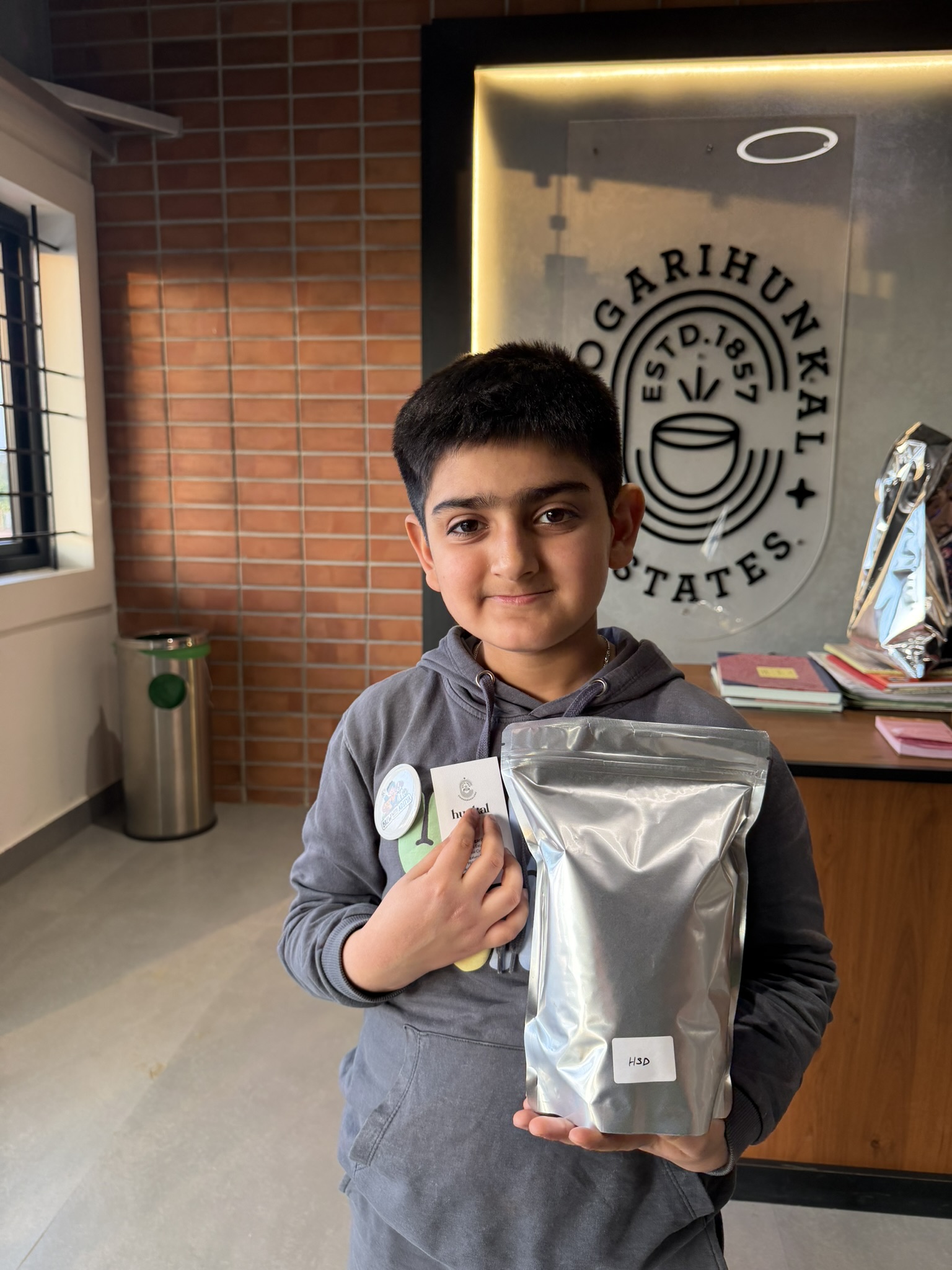
Hi, I’m Aditya. I’m seven years old, and I’m on a coffee adventure with my parents.
A few days ago, I was sitting inside a plane, looking out of the window and thinking about coffee farms. I felt excited because this trip is not just about cafés. It is about where coffee starts and how it becomes something people love every morning.
When we landed in Bangalore, I felt like my coffee adventure had become real. Bangalore felt busy and bright, and I kept thinking, “Somewhere near here, coffee is growing on hills.”
After that, we travelled to Chikkamagaluru (Bababudangiri Region)and visited many estate and in this blog I’ll mention my visit to Hunkal Estate Coffee. I was very happy because they welcomed me kindly and showed me many things that felt new and amazing.
Some people call me the youngest coffee roaster, and I always smile when I hear that. But I also know I am still learning, and I learn best when people explain things slowly and nicely.
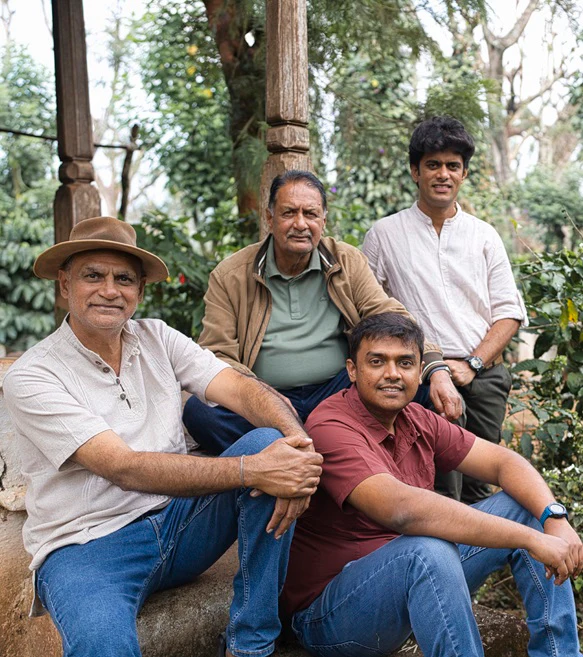
Reaching Hunkal Estate Coffee Felt Special
When we reached, I saw a place that looked very clean and professional. The people there were warm and friendly. They treated me well as a professional roaster who is willing to learn more. Uncle told me that Nandan and Abhishek are the 7th generation of Thogarihunkal Estate, which is also known as Hunkal Estate. It made me feel excited because it means their family has been growing coffee for a very long time, and they still love it and take care of it every day. It was so much fun to meet both of them, and I felt really happy when they let me make an AeroPress for them in their office.
Their Roastery Was Very High-Tech
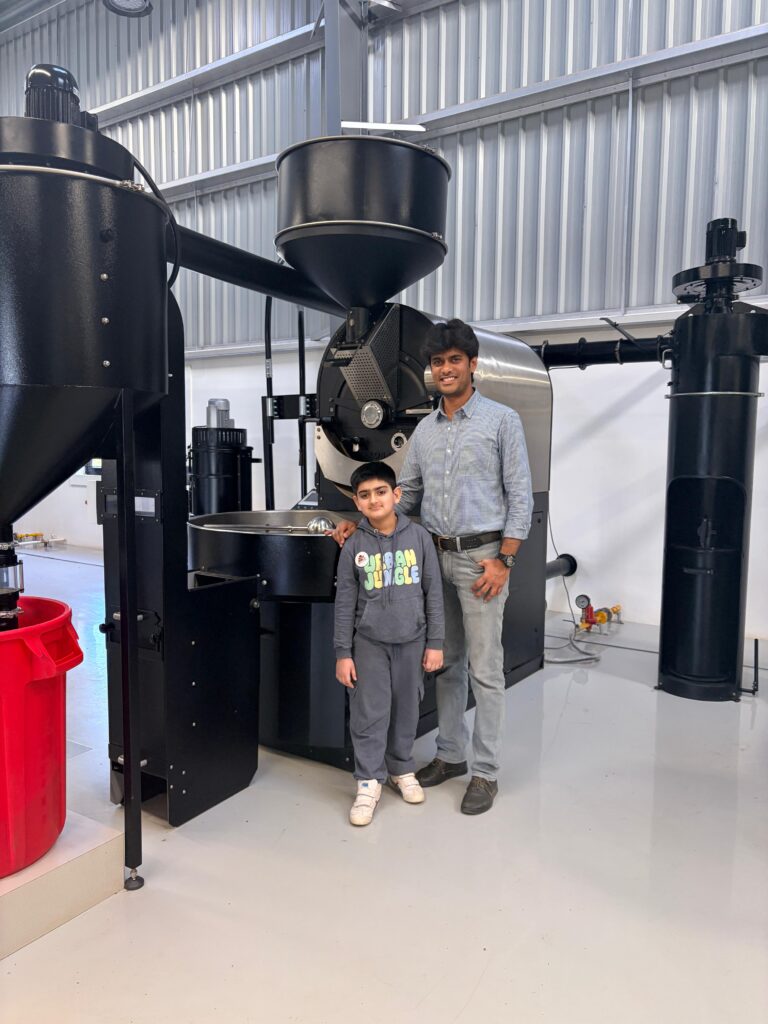
The most exciting part for me was their roastery.
I saw a setup that looked modern and very serious. They showed me machines, tools, and a proper space where they roast and check coffee. Everything looked organised, like each thing had its own place.
They explained things to me calmly. I liked that they did not rush. I could ask questions, and they answered nicely.
My parents stayed close to me the whole time, and that made me feel safe and relaxed while learning.
They Let Me Use Their Lab, and I Felt Very Thankful
This was a big moment for me.
They let me use their lab area for learning. I felt very thankful because a lab is not just a room. It is a place where people check coffee carefully and learn about it properly.
I tried to be extra careful to respect their space and tools. Felt happy because they trusted me enough to learn there.
I Got to Make AeroPress for Them
My favourite part happened in the evening.
They gave me a chance to make an AeroPress for them. At first, I felt a little nervous because I wanted to do it neatly. But then I focused on steps, like I always do.
I made it slowly, with care, and my parents and Sumit (my teacher) were there with me. When I finished, I felt proud because it felt like I was sharing a small coffee gift with them.
I am very thankful to the Hunkal Estate Coffee team for letting me do that, and for treating me with so much kindness.
What I Learned From This Visit (In My Simple Words)
Here are the main things I learned today:
- Coffee is not just a cup. Coffee is a long story that starts on farms and unfolds step by step.
- A roastery is like a “coffee kitchen,” but with bigger machines and more careful checking.
- People who love coffee do things slowly and properly, not in a hurry.
- When someone explains things kindly, learning becomes easy and fun.
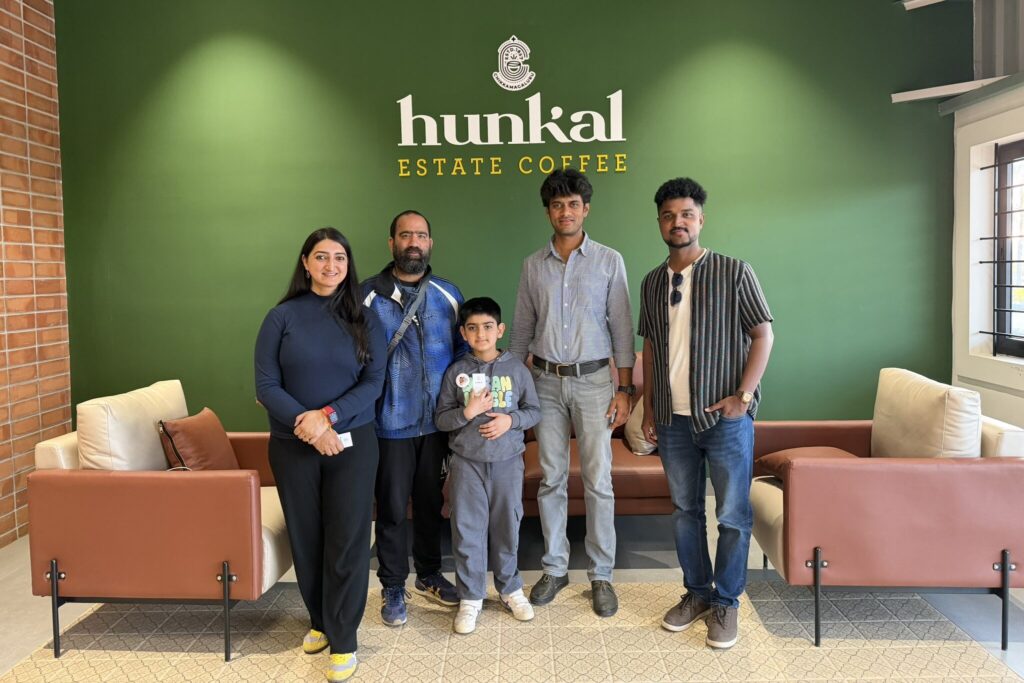
Note from Parents (Vardish):
It was very nice talking to Nandan, Abhishek and T N Chennabasave Gowda Sir. He has a beautiful, grounded philosophy about life—simple things like staying humble, doing honest work every day, and letting patience build real results. We could feel that mindset not only in the way he spoke, but also in how the family approaches coffee. The visit felt warm, respectful, and full of learning, and we are truly grateful they welcomed Aditya so kindly.
From what we understood during our visit and from their own process notes, Hunkal Estate Coffee is built around the idea of estate coffee. That means the coffee comes directly from their own estate, and the same team stays involved through the full journey. They describe it as a structured, end-to-end approach with a 10-step “bean to brew” process, so quality is checked again and again instead of being left to chance at the end.
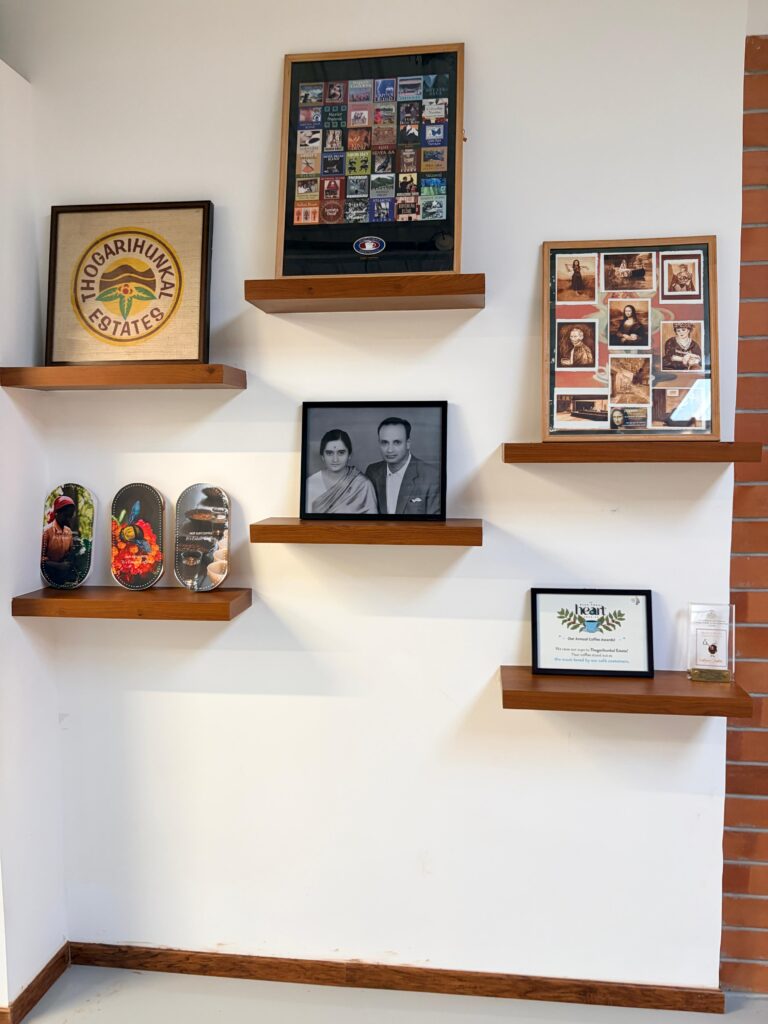
Their story also carries deep roots. They share that their coffee journey began in 1857 in Chikkamagaluru, and that their great-great-grandfather T. B. Malle Gowda identified the right conditions for growing Arabica and developed the plantation with early British guidance. They also explain the naming clearly: “Hunkal” is the brand, while “Thogarihunkal” is the estate name, tied to their family identity and legacy.
What we appreciated most was the clarity of their coffee-growing and roasting flow.
Their process begins with seedlings raised in shaded beds, so young plants are protected early. Those plants then grow into coffee bushes on the estate, and they note it usually takes 3–4 years before the bushes start producing ripe red cherries. Harvesting is done through careful hand-picking of ripe cherries, focusing on selection and cleanliness rather than speed.
After harvest, the coffee moves through quality steps like sorting and grading, which helps remove defects and keep lots consistent. They also include tasting as a quality checkpoint before final roasting decisions are locked, which shows that quality is treated as a repeated habit, not a single inspection.
They also explain both major processing methods they use, depending on the batch.
In the dry method, cherries are spread under the sun for around 15–20 days. In the wet method, water is used to extract the beans, and they describe it as creating a cleaner, brighter profile. This is an important point for readers because it shows how flavour direction is shaped long before beans reach a roaster.
For roasting, they mention using Diedrich drum roasters and Probat as part of their setup, which fits with the consistency and control they aim for. They also highlight an “Estate Freshness” promise, sharing that each batch ordered is no more than 15 days old, which reflects a strong focus on keeping coffee moving fresh rather than sitting too long.
They also mention recognitions, including the “Flavour of India Fine Cup” award across 2008, 2009, 2010, and 2011. Awards are always nice, but what mattered more to us was seeing the seriousness behind their daily process and the respect they have for the craft.
Overall, this visit felt meaningful for our family. Aditya got to learn in a real professional environment, with people who were patient, kind, and genuinely happy to explain. We left feeling thankful—not just for the coffee knowledge, but for the way they made a young learner feel welcome and respected.
Ending Note From Me
This day made me very happy. I saw a high-tech roastery, I learned new things, and I got to make an AeroPress for them. I will remember this visit because they were kind, and they helped me learn in a real coffee space.
Bangalore and Chikkamagaluru are giving me so many coffee stories, and I want to keep learning step by step with my parents by my side.
This day made me very happy because I saw a high tech roastery, learned many new things, and even made an AeroPress for them. I will always remember this visit because they were kind and helped me learn in a real coffee space. I want to include their coffee beans in my roasted coffee beans catalogue. Bangalore and Chikkamagaluru are giving me so many coffee stories, and I want to keep learning step by step with my parents.